

Those Albums on Your Shelf — Sound Familiar?
Be honest — you have at least one. That sticky-paged, plastic-covered album you’re a little afraid to open.
You know the one. Dark pages. A clear plastic sheet you peel back, press a photo down, and smooth over. Maybe a little label underneath in your mom’s handwriting. Those albums live on almost every family’s bookshelf — and most people have no idea they’re slowly destroying the photographs inside them.
I know this, because I have one of my own.
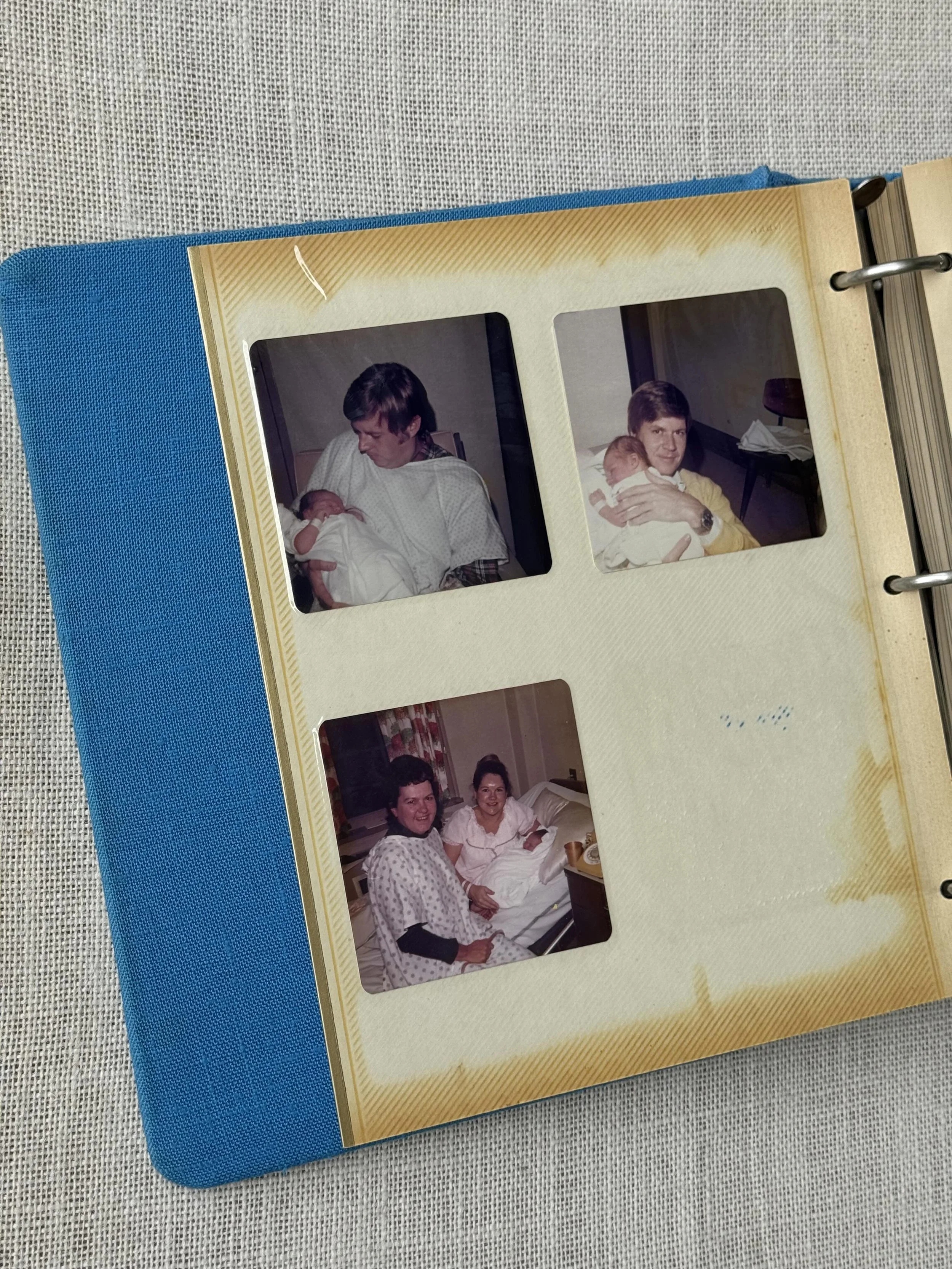
My baby album - started by my mother in the late 1970’s
My Mom Started Mine in the Late 70s
My baby album came together the way most did — with love, attention, and those familiar sticky pages. My mom began it in the late 1970s, carefully laying out photos and pressing the plastic flap down to hold each one in place. It was made with so much love.
But those albums — sometimes called magnetic albums — are among the most damaging ways to store photos. The adhesive grips the back of each print and slowly bonds with the emulsion layer. The plastic traps heat and moisture. Colors fade. Images yellow. And some photos stick so firmly to the page that attempting to remove them the wrong way tears the picture in half.
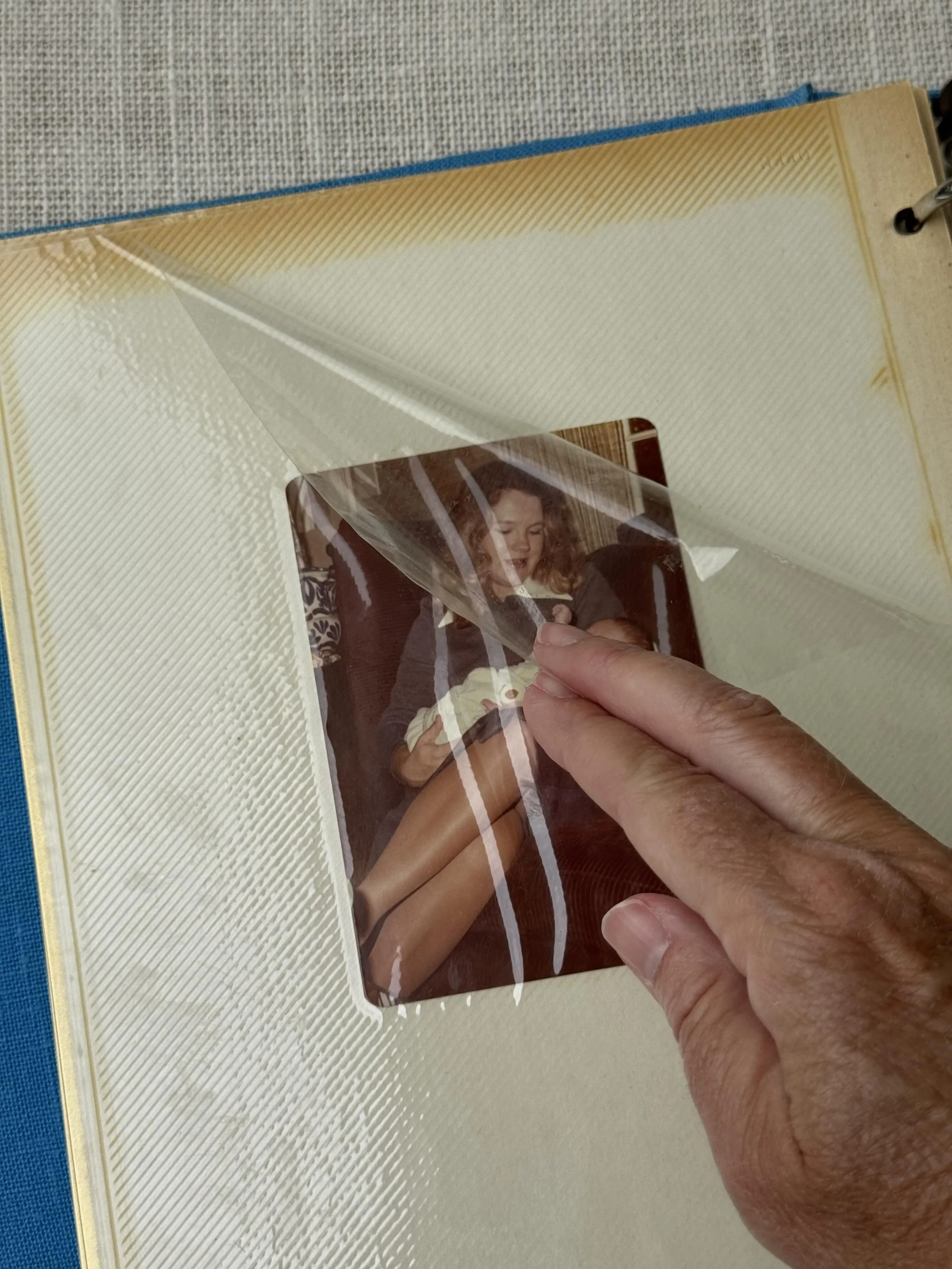
The plastic film peeling away - and the adhesive damage left behind.
You’re Not Alone — and It’s Not Too Late
Albums like these are in almost every home I walk into. I recently finished a project with nineteen mismatched albums — different sizes, different years, all falling apart in different ways. What came out the other side was one clean, uniform digital collection, every photo accounted for and protected.
That’s what’s possible, even when the starting point looks hopeless.
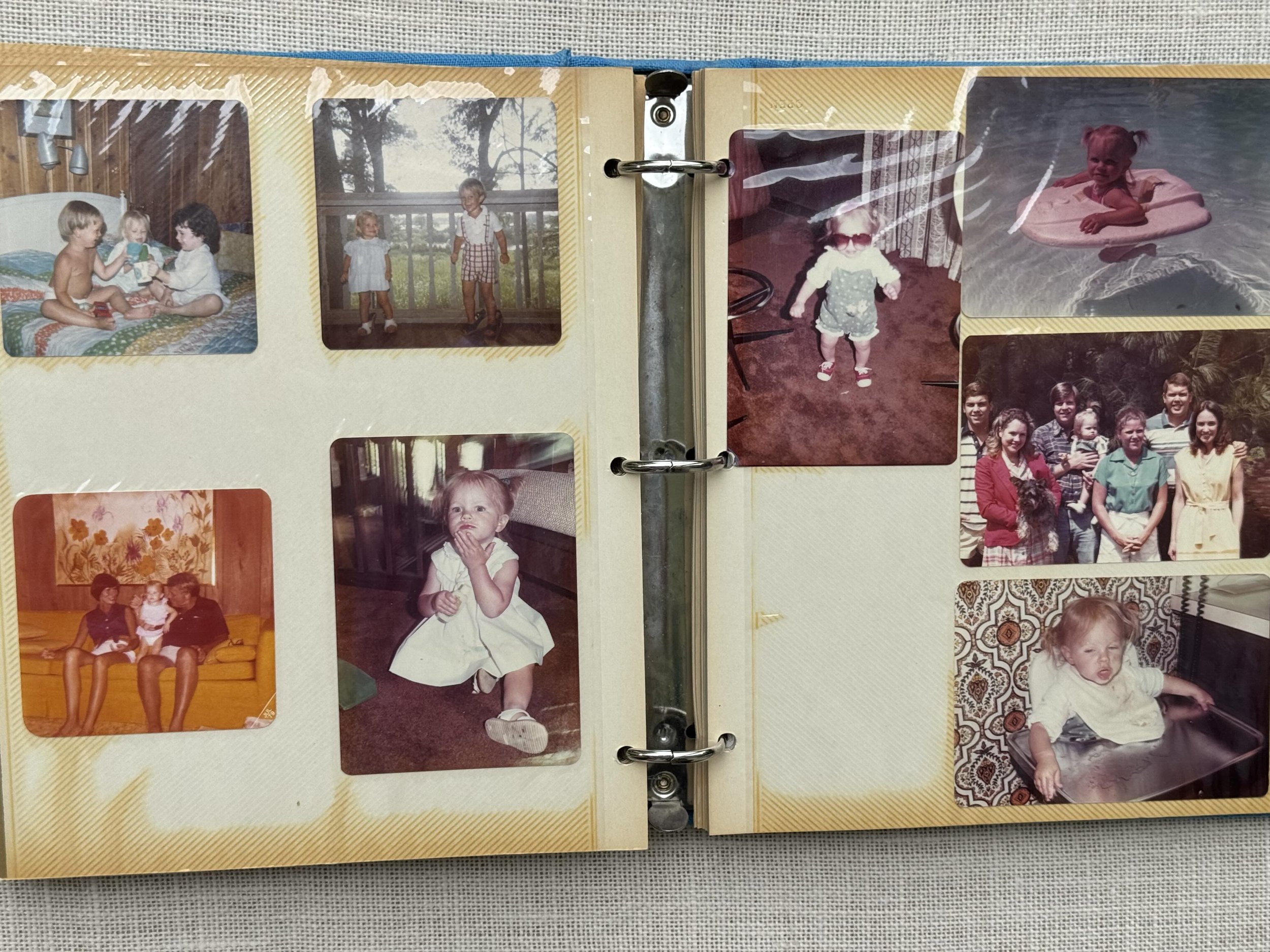
The full album spread - decades of memories, all waiting to be rescued.
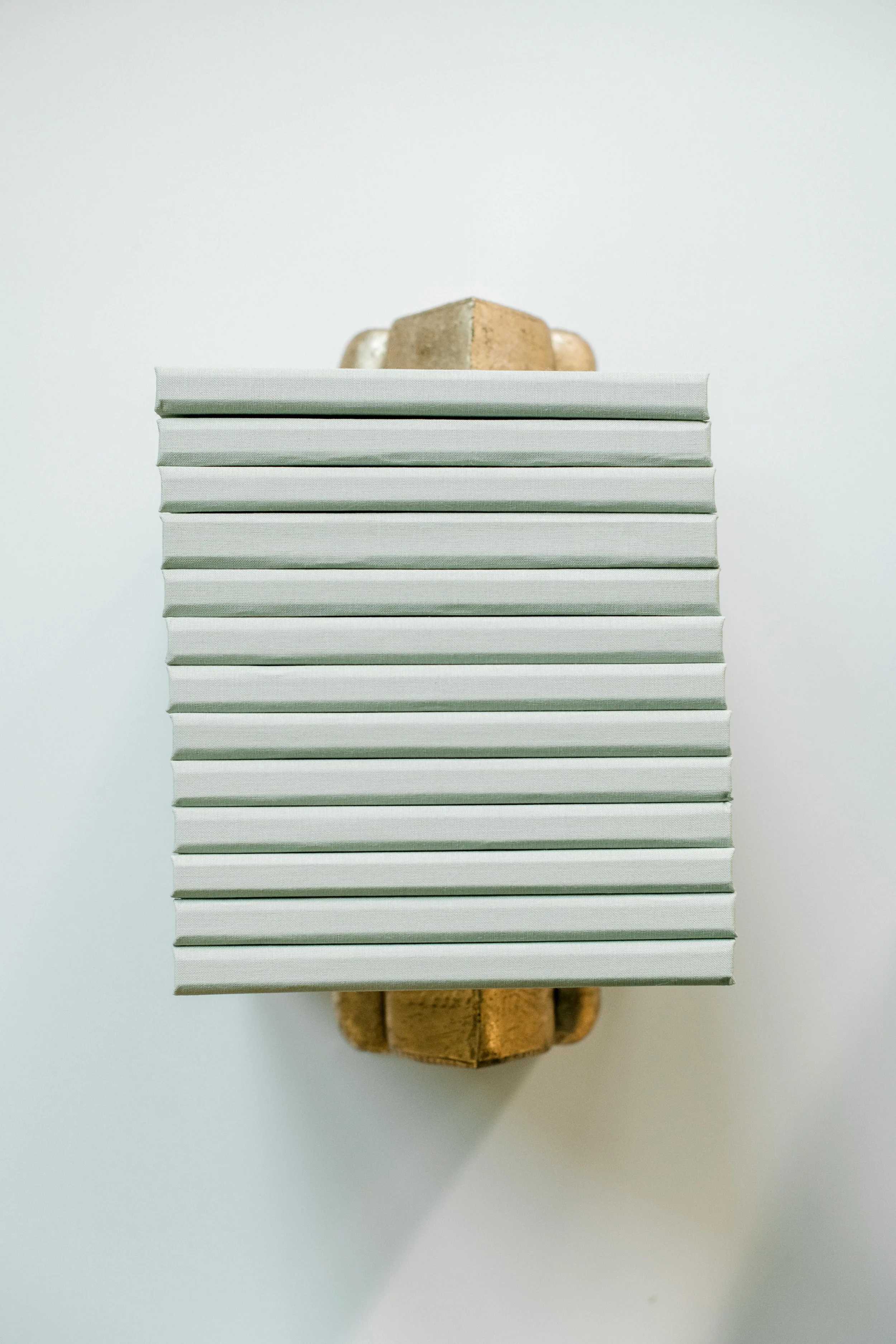
The finished result: nineteen albums, now one unified, beautifully organized collection.
Getting the Photos Out Without Losing Them
This is where a palette knife becomes your best friend.
When I work on adhesive albums — including my own — I slide a thin palette knife gently between the photo and the sticky backing, working slowly from corner to corner. There’s no rushing this part. Some photos lift cleanly. Others need patience and coaxing. You learn to feel the difference between the adhesive releasing and the moment you’re about to cause damage.
Once each photo is free, I stack and sort them in the order they appeared in the book. That sequence matters — those photos were arranged a certain way for a reason, and the order is part of the story.
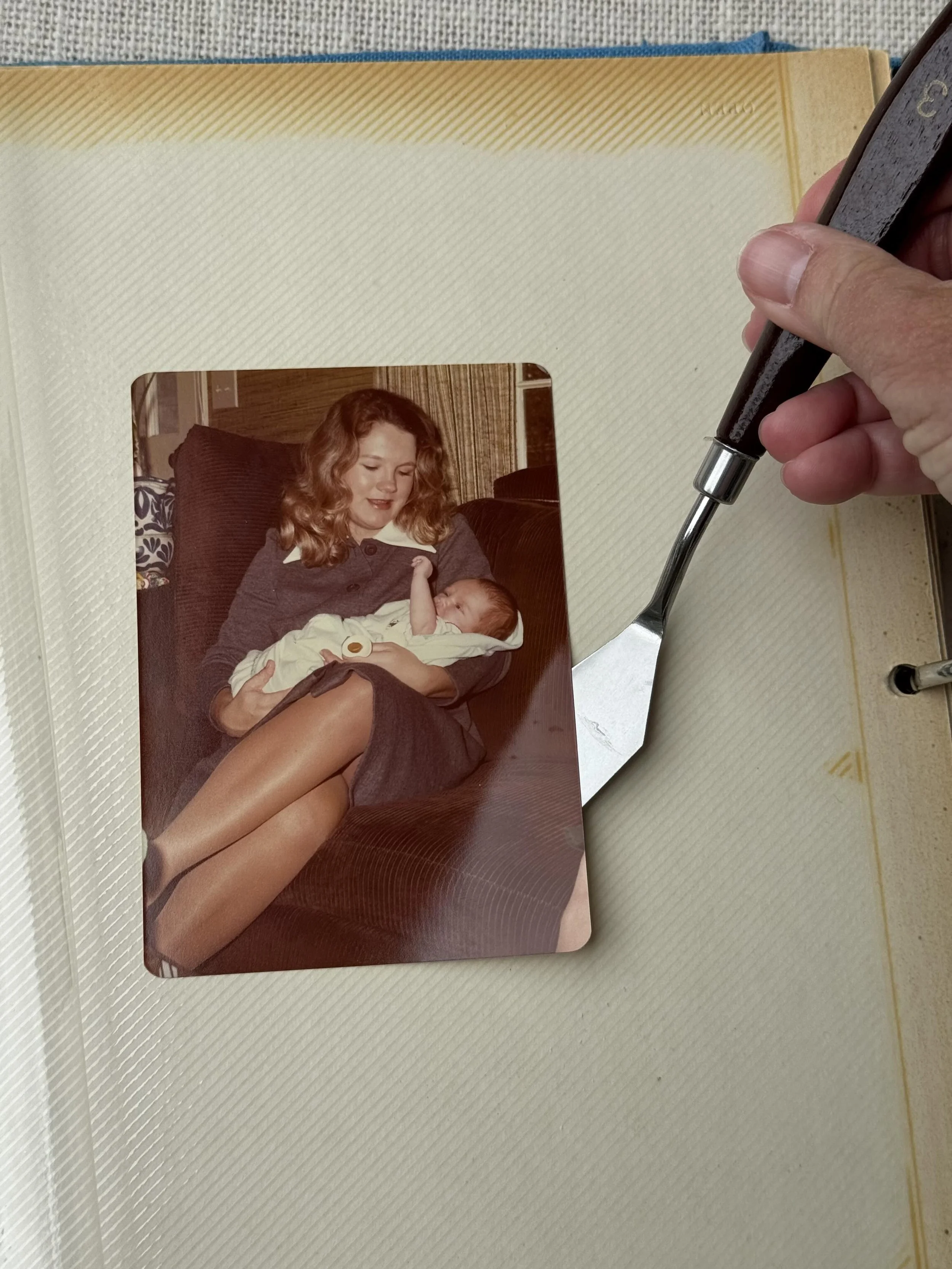
A pallet knife carefully working a photograph free from the adhesive page.
Then Comes the Scanning
After the photos are out, each one gets scanned individually — a high-resolution digital file for every single print.
And then I rename each one in a way that will make sense thirty years from now. Not IMG_4832. Something like “1977-Jennings Baby Book” or
“1978-11-24-Jennings First Birthday” — names that tell you exactly what you’re looking at, organized in chronological order so the story actually flows.
What You End Up With
By the end, your photos aren’t just saved. They’re organized in a way that tells your story properly.
Your collection comes back to you on a flash drive or hard drive, every photo named and ordered so it all makes sense. Some customers want an extra layer of security, so I can also upload everything to a cloud service built specifically for photos — just in case. Or, if you’d like, I can take it a step further — beautifully designed new digital albums to replace the old ones entirely. Either way, it’s there for you, and for whoever comes after you.
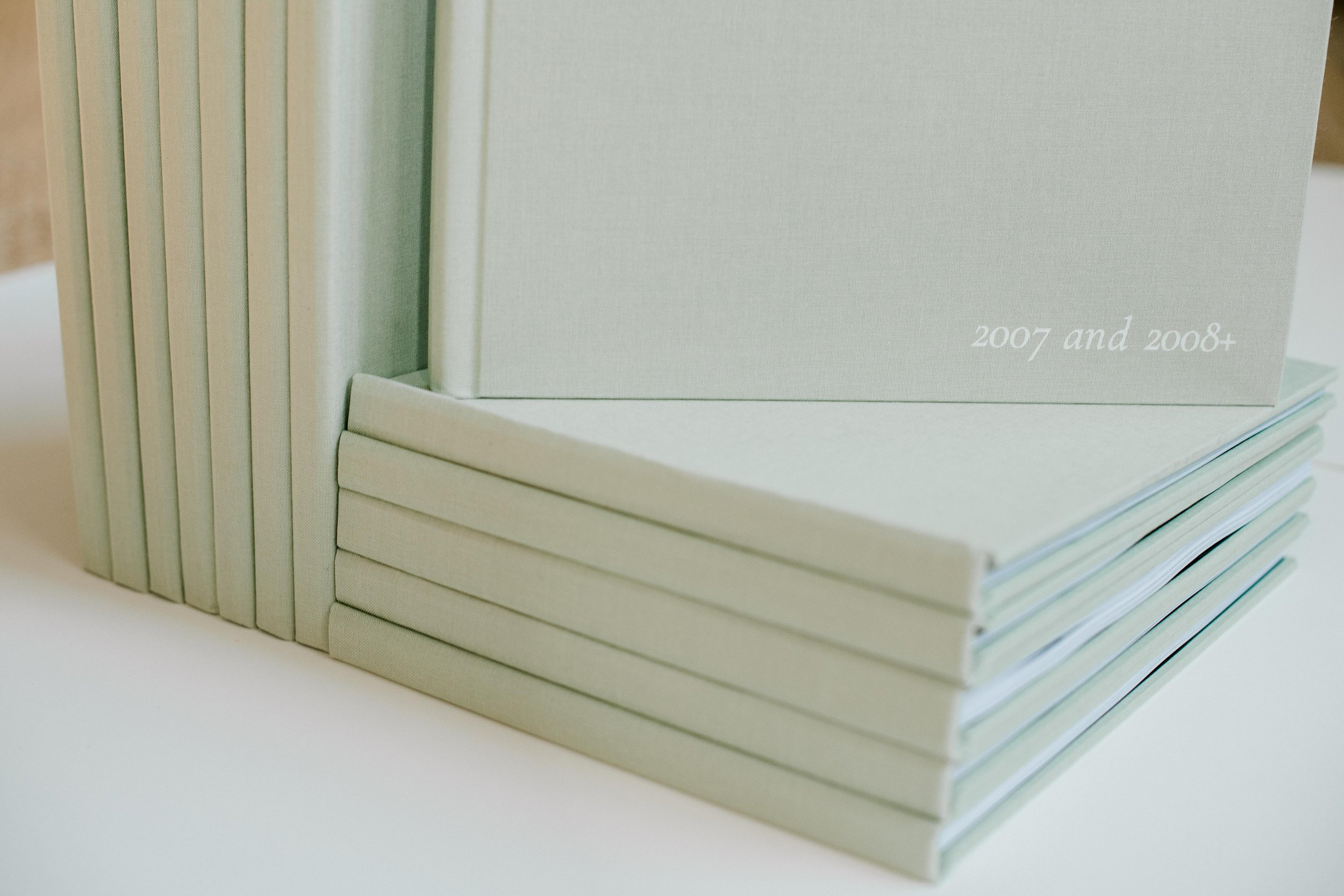
The beautifully designed finished albums — labeled by year, ready to last a lifetime.
This Isn’t About Tidiness
It’s about making sure these stories are still there for your kids and grandkids to find — easy to open instead of buried in a closet, safe from the damage that’s already underway.
And it’s about more than just one safe copy. When your photos live digitally, they can be shared with everyone in the family — a sister in another state, a cousin who never knew your grandmother, grandkids who haven’t been born yet. No one has to drive across town to flip through an album. No one has to worry that there’s only one copy and something happens to it. The cloud makes it possible for the whole family to have it, all at once.
Family history deserves better than a dusty shelf and a cracking spine.
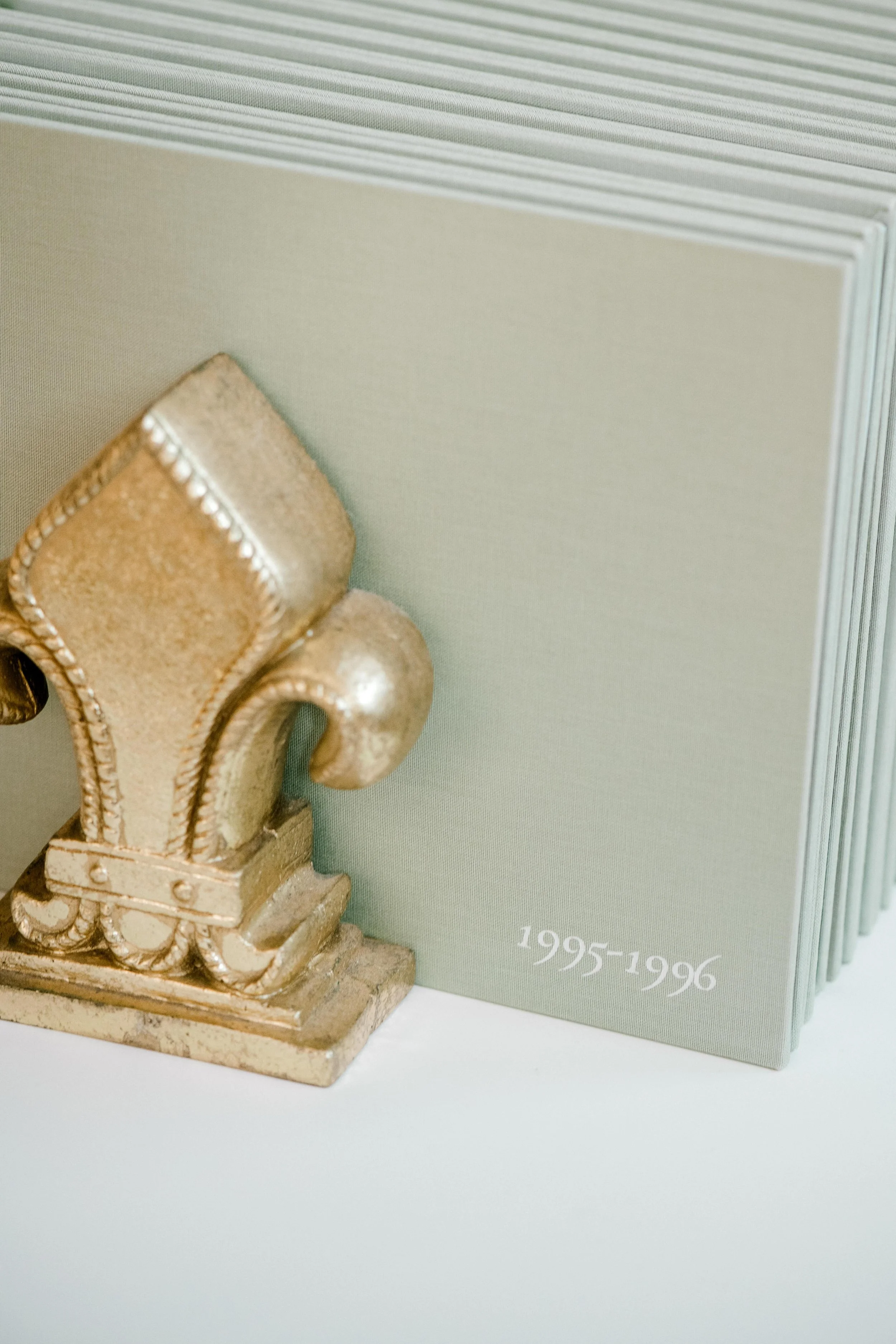
Organized, protected, and ready to be shared — for generations to come.
Ready to Rescue Yours?
If you’ve got albums waiting at home, I’d love to show you what’s possible. Whether it’s one album or a closet full, let’s talk through what you have.
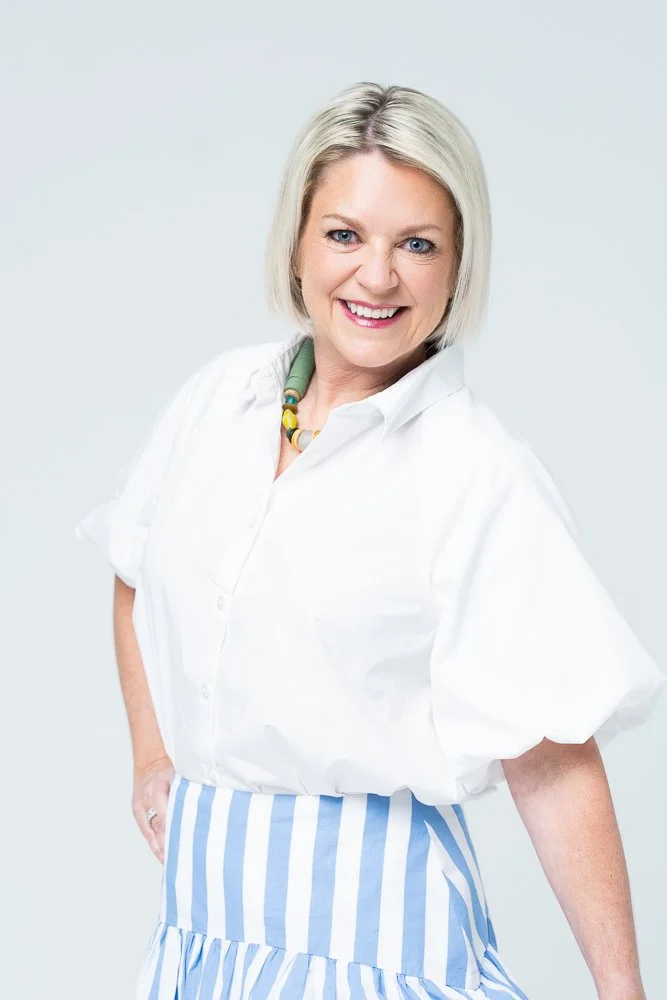
Jennings King is the founder of Space Maker Professional. Based in Charleston, South Carolina, she helps families and businesses simplify their lives through digital organization, photo and video preservation, and workspace systems that feel calm and easy to maintain. Jennings is passionate about preserving family history in a way that feels both emotional and practical — because the memories matter, and they deserve to be protected for generations.