

A behind-the-scenes look at my process, from the first unsorted box to the last “done” sticky note.
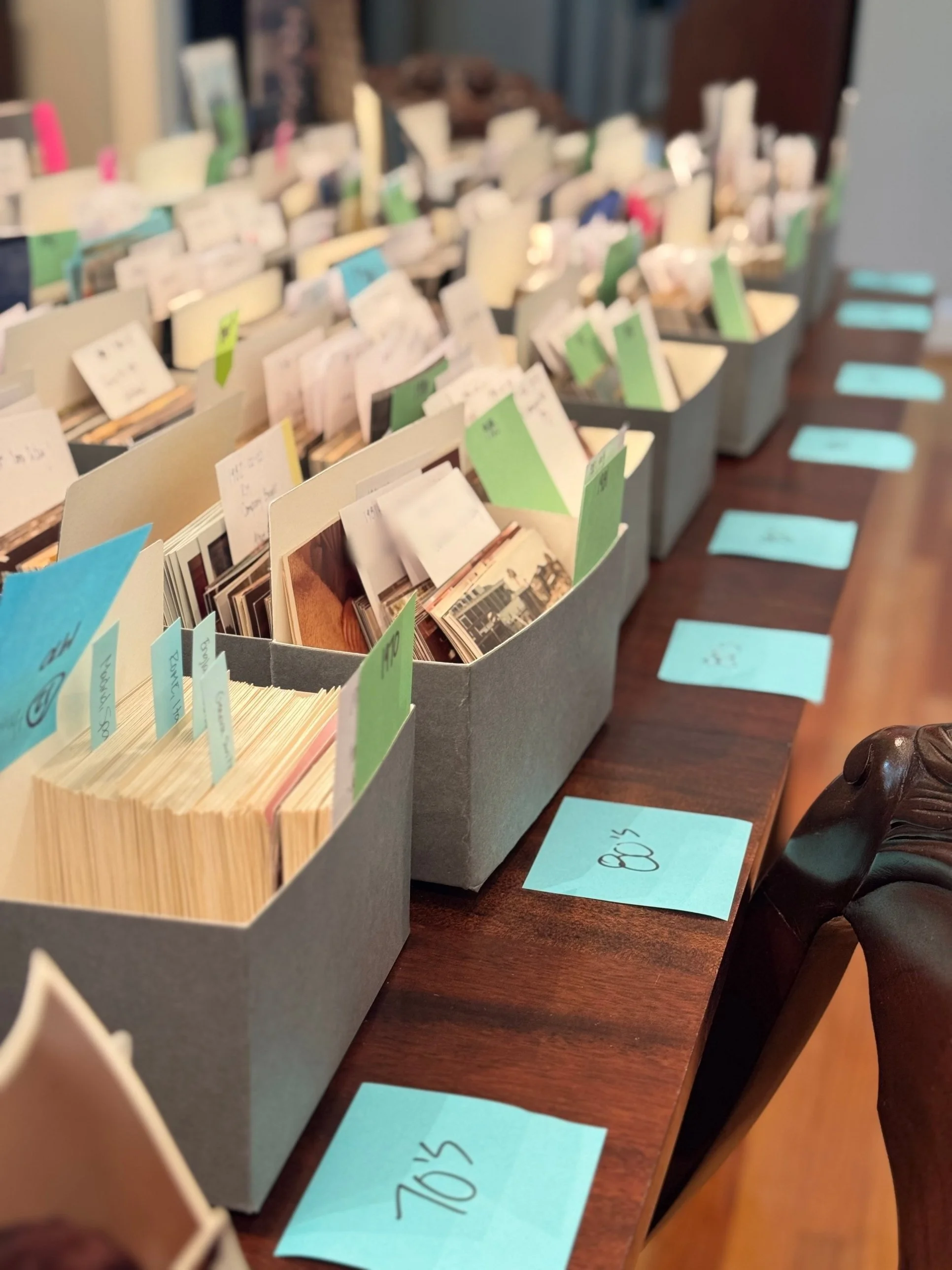
“What actually happens after I hand you my photos?” It’s one of the questions I hear most. So this month, I’m pulling back the curtain on my process. Here’s how a lifetime of prints, albums, envelopes, and keepsakes goes from scattered boxes to one clear, chronological story your family can enjoy for generations.
You Don’t Have to Organize Before You Call Me
So many people tell me they need to get their photos “under control” before they reach out.
Y’all, please don’t!
You shouldn’t have to organize your photos before hiring someone to organize your photos. That part is my job.
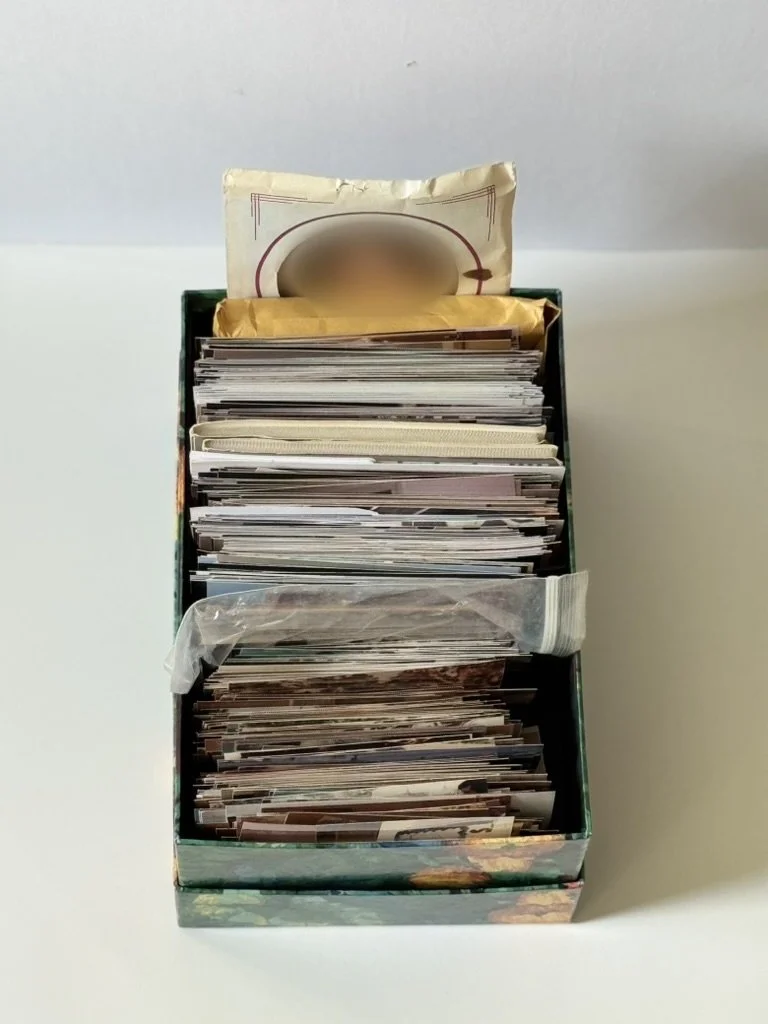
Bags, bins, tubs, and shoeboxes. Albums from your parents’ house. Photo envelopes that haven’t been opened since they came back from the drugstore.
Trust me, I’ve seen it all.
And even the jumble holds clues. Those old drugstore envelopes often have a date or a name written right on the front, and one little note like that can place a whole stack of photos in time. So please don’t toss anything or try to tidy it up first.
Show me what you’ve got, exactly as it is. That’s where we start.
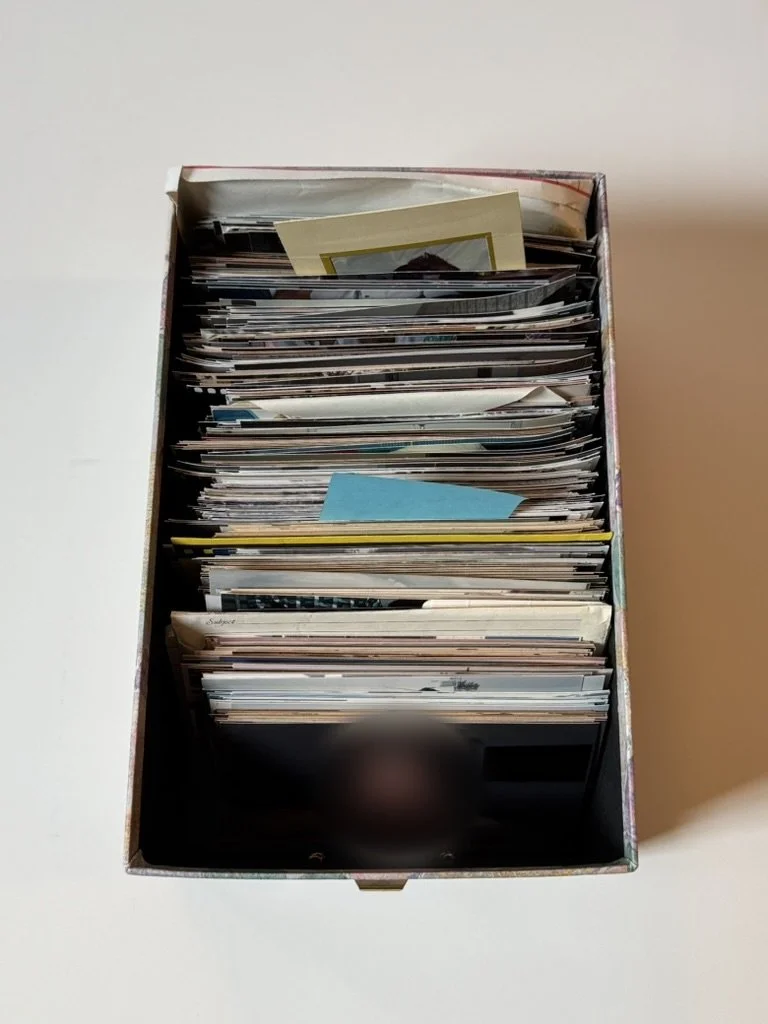
Why I Take Photos Out of Old Albums
Albums show up in almost every collection I work on. And here’s something that surprises a lot of people:
I carefully take the pictures out and add them to the rest of the collection, in chronological order.
Why? Because your story shouldn’t be split between an album on the shelf and a box in the closet.
When every photo lives together, in order, your family’s story reads from beginning to end, the way it was actually lived.
There’s a preservation reason, too. Many older albums, especially those sticky “magnetic” ones so many of us grew up with, aren’t kind to photos over time. The glue and plastic break down over the years and can yellow the very pictures they were meant to protect. And here in the Lowcountry, our humidity doesn’t help one bit.
Getting those photos out, and safely scanned, is one of the best things you can do for them.
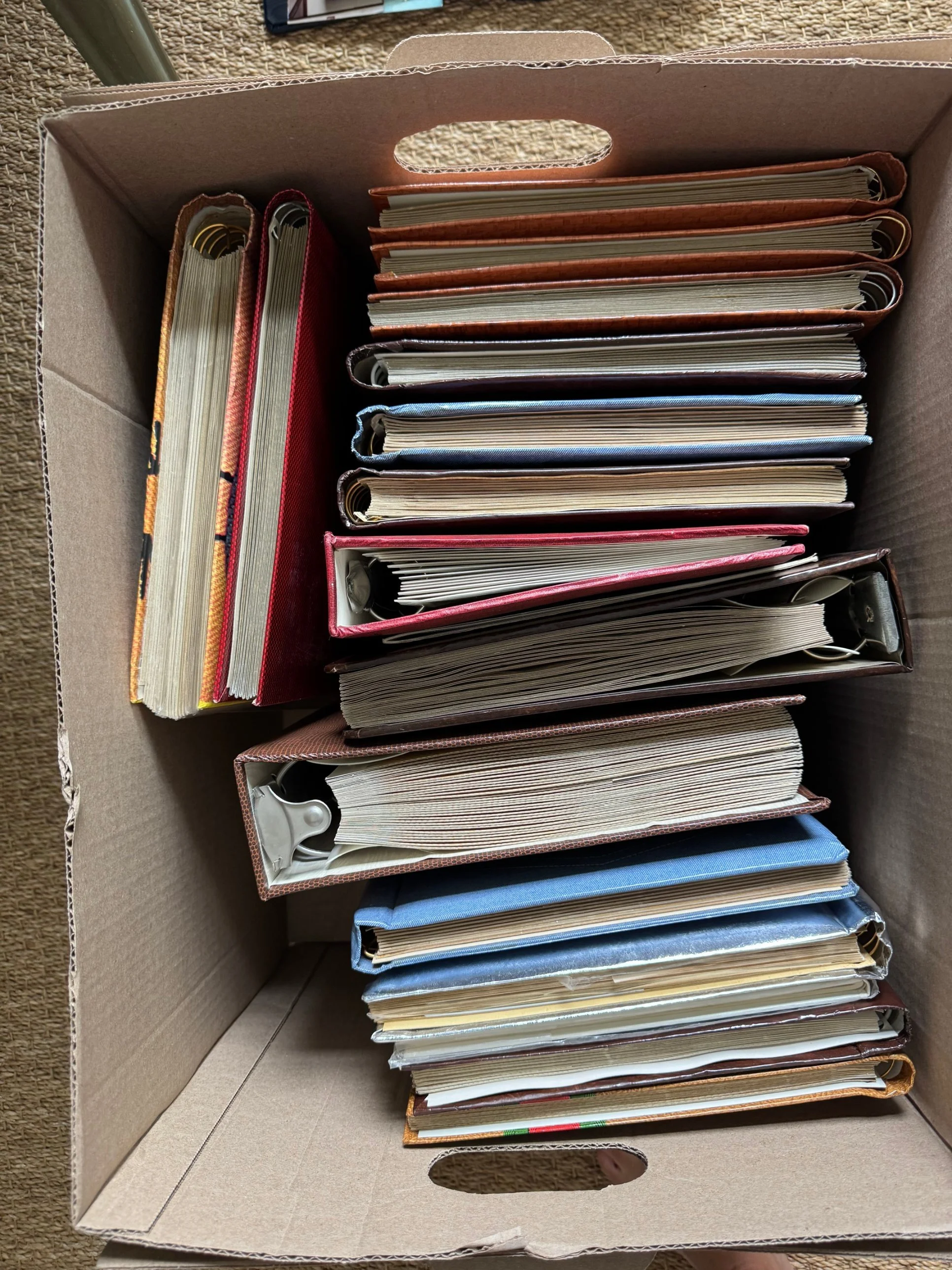
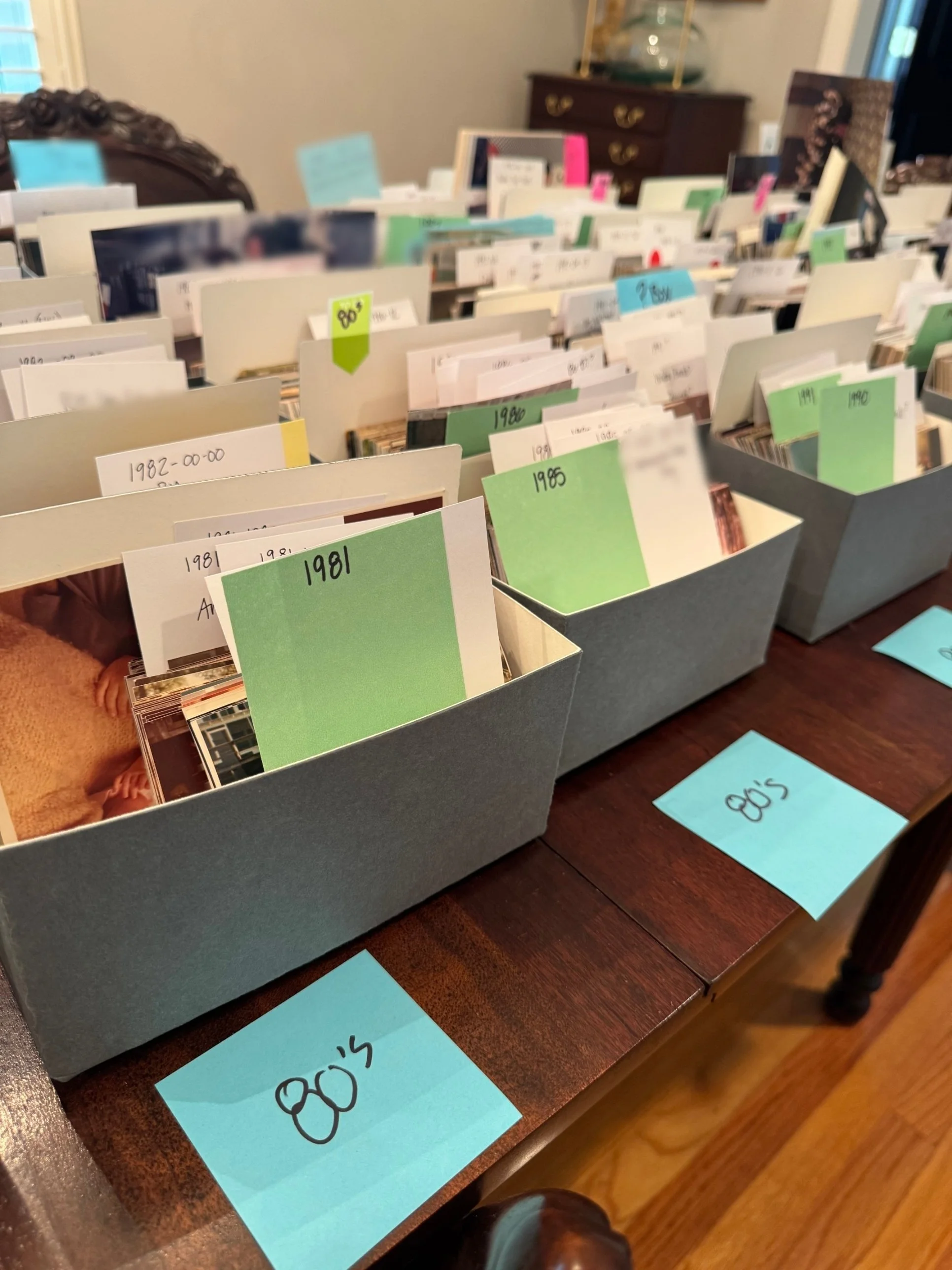
Sorting by Decade, Then Year, Then Event
Once everything is out, the sorting begins!
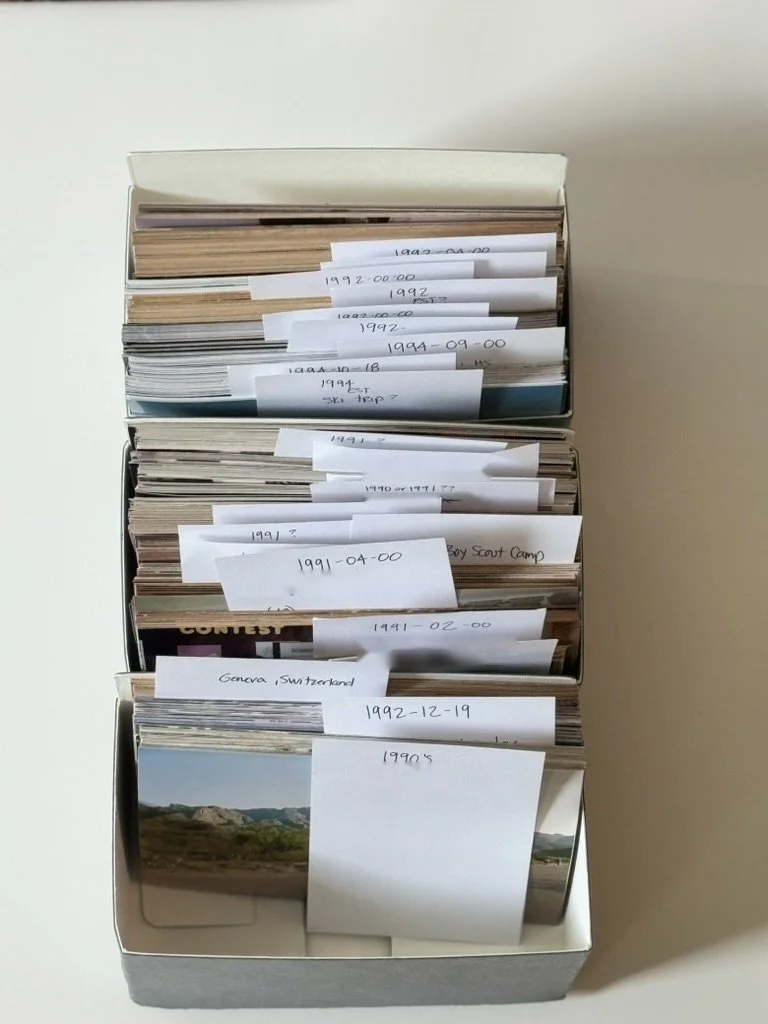
I use these grey caddies to sort photos by decade first. Then by year. Then by event.
Each caddy holds about 350 photos, which keeps even the biggest collection from feeling overwhelming.
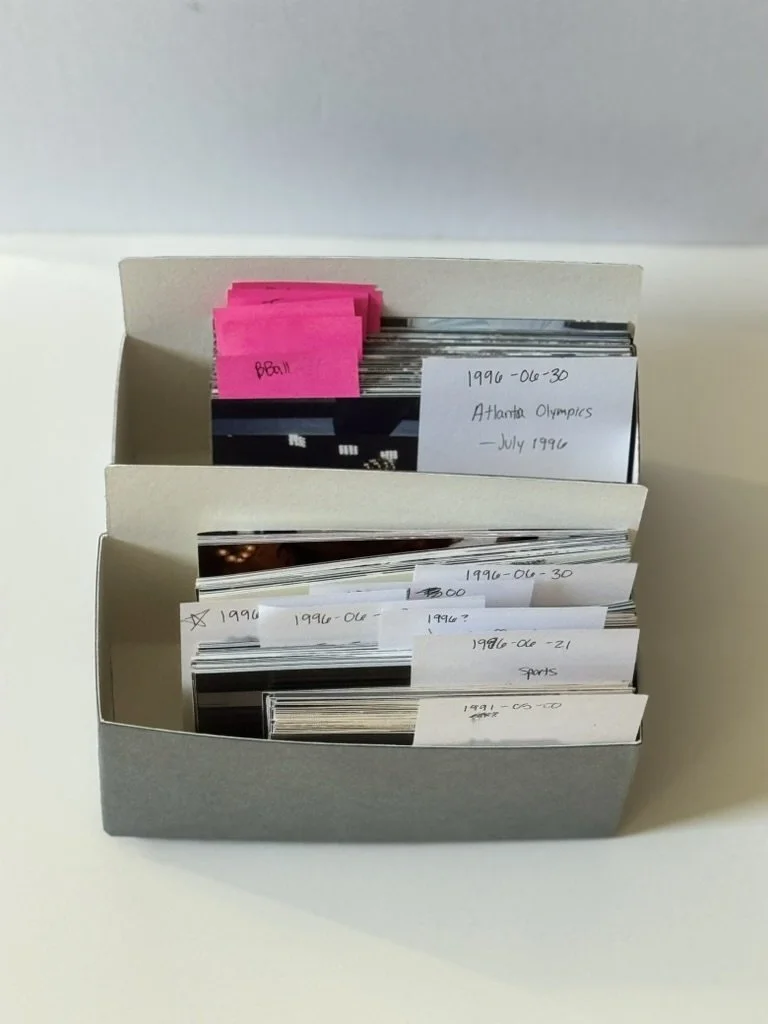
If you look closely, you’ll spot a little color system. A blue sticky note on the table marks each decade. A green card marks each year. White cards mark the events inside that year, with the date written year first, like 1991-04-00. The zeros hold the place when I don’t know the exact month or day yet, and a question mark means it’s my best guess for now.
Before Space Maker Professional, I spent thirteen years as a wedding photographer, telling each couple’s day in order, from getting ready to the send-off. Sorting a family’s photos feels a lot like that. Every caddy on the table is a chapter.
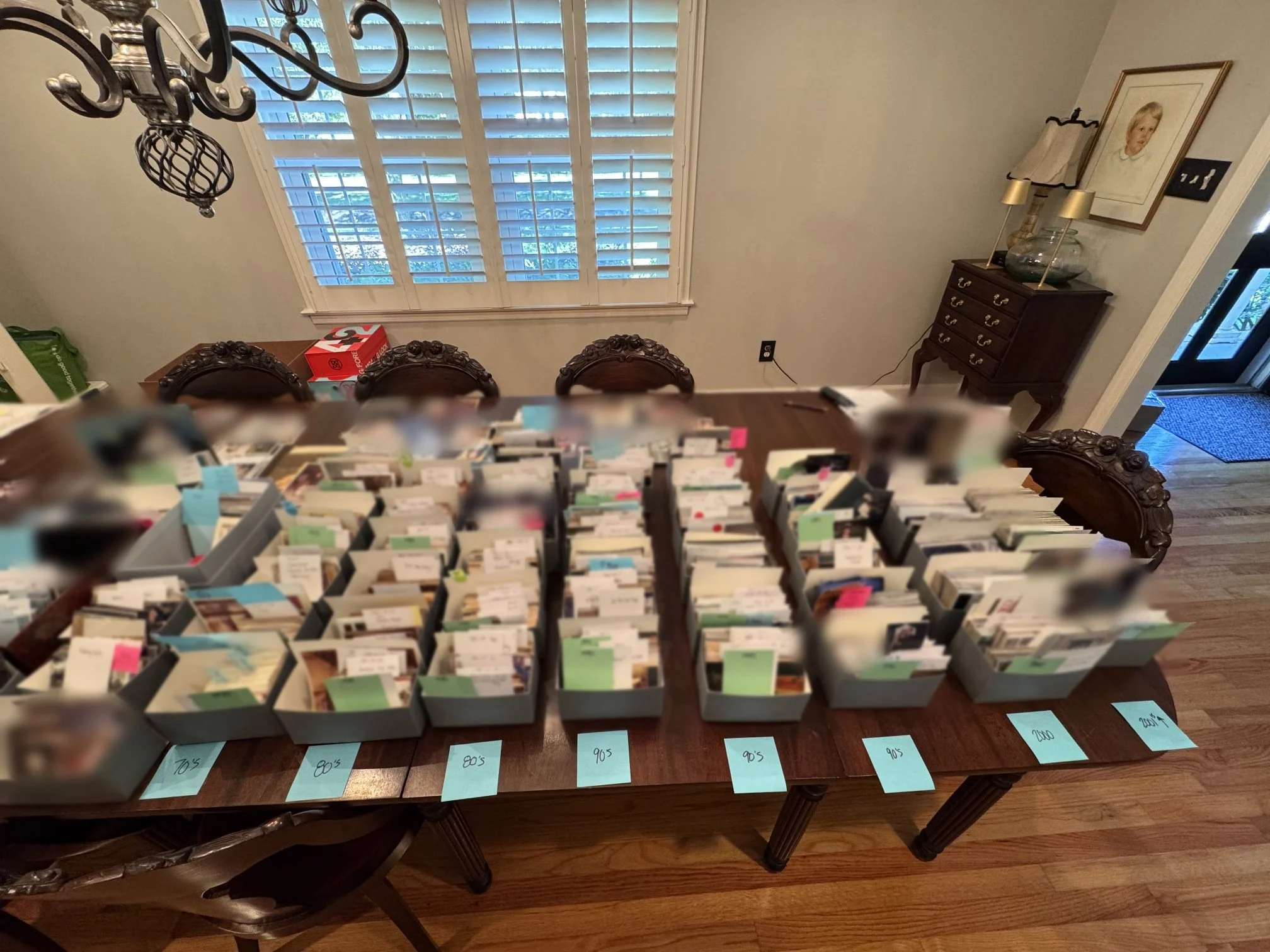
Scanning One Caddy at a Time
From there, I scan one caddy at a time, so everything stays in order as I go.
When a caddy is finished, it gets a “done” sticky note. One look at the table and I know exactly where we are.
That matters more than you might think. A lifetime of photos is a lot of photos! Without a system, it’s easy to lose your place, scan the same stack twice, or let one stray print wander into the wrong decade. You’d be surprised how quickly you can forget where you left off, even after stepping away for a few minutes. It’s a lot of information to keep track of.
Ticket Stubs, Keepsakes, and Everything Tucked In Between
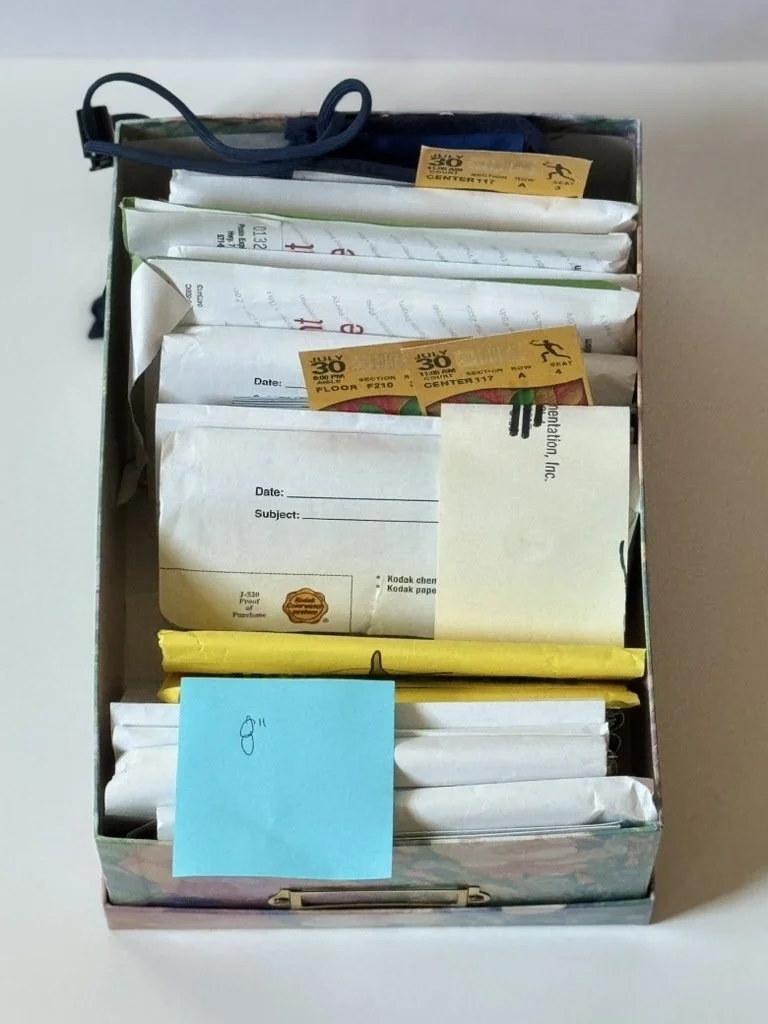
In one client’s box, tucked between old photo envelopes, were ticket stubs from the 1996 Atlanta Olympics!
Those stubs aren’t just paper. They’re part of the story, too.
So I camera scan them and file them right alongside the photos from that summer. When the family scrolls through 1996, the tickets and the pictures tell the story together.
Sometimes the little things tucked into a box say just as much as the photos do.
From Scanning Order to a Finished Collection
A quick note about the photos you’ve seen here.
What’s on my table is the working stage, not the finished product.
This client didn’t need their prints back, so the caddies, cards, and sticky notes only had to keep everything in order for scanning.
When a client does want their photos returned, I finish the physical side, too, with labels and stickers so the prints are just as easy to find as the digital files.
Either way, here’s what I want for your collection.
Not a hard drive full of SCAN_0472.jpg.
A collection that’s organized, easy to find, and a joy to look through and share.
One story, in order, from the oldest black-and-white print to the newest snapshot. Something your children and grandchildren can open someday and actually understand.
A Thanksgiving Table Idea
If your family gathers for Thanksgiving this year, try spreading some old photos across the table.
Then just listen.
The stories that come out are the best part. Who took that picture. Whose car that was. Why everyone had the same haircut in 1985.
Bonus tip: open the Voice Memos app on your iPhone and hit record, so you save the stories and the voices. I wrote more about recording your loved ones’ stories here.
So wherever your photos are hiding right now, whether that’s a hall closet, the attic, or your parents’ guest room, you don’t have to sort them, label them, or apologize for them.
Just show me what you’ve got, and I’ll take it from here.
P.S. November is my birthday month, and I’m celebrating with a Past, Present & Future series over on Instagram. Come join me!

Jennings King is the founder of Space Maker Professional. Based in Charleston, South Carolina, she helps families and businesses simplify their lives through digital organization, photo and video preservation, and workspace systems that feel calm and easy to maintain. Jennings is passionate about preserving family history in a way that feels both emotional and practical — because the memories matter, and they deserve to be protected for generations.